








 EnglishAbout DutchGuides
Is Dutch Worth Learning? An Honest Cost-Benefit for English Speakers

Ask this question in any expat forum and you'll get the same reply within minutes: "Don't bother – everyone in the Netherlands speaks English better than you do." It's the standard advice, it's delivered with total confidence, and it's about one-third true.
So, is Dutch worth learning? The honest answer depends on a variable most articles skip: what you're actually optimizing for. If you measure a language purely by "can I order a sandwich without it," Dutch loses. If you measure it by friendships, career ceilings, residency paperwork, and whether you ever feel at home in your own neighborhood, the math changes completely.
This article runs the real cost-benefit. You'll see what Dutch actually costs in hours (less than you think), what it buys you (more than the forums admit), who should skip it guilt-free, and how to handle the notorious moment when every Dutch person switches to English on you.
Table of Contents
- The Case Against: Yes, Everyone Really Does Speak English
- The Cost Side: How Hard Is Dutch for English Speakers?
- The Benefit Side: What Dutch Actually Buys You
- The Verdict by Learner Profile
- The Switch-to-English Problem (and How to Beat It)
- FAQ
- Key Takeaways
The Case Against: Yes, Everyone Really Does Speak English
Let's give the skeptics their due, because their core fact is correct. Surveys consistently estimate that around 90–95% of Dutch people speak English, among the highest rates of any country where English isn't the native language. Dutch children start English at school by age ten, television is subtitled rather than dubbed, and Amsterdam's professional world often runs in English by default.
The practical consequences are real. You can live in Amsterdam or Utrecht for years handling shops, doctors, taxes, and dinner parties entirely in English. Nobody will refuse to serve you. Many internationals do exactly this.
If your stay is short – a semester, a one-year contract, frequent business trips – the skeptics are right, and you can stop reading here with a clear conscience. For everyone else, the interesting question isn't whether you can avoid Dutch. It's what avoiding it quietly costs you – and what learning it would actually take.
The Cost Side: How Hard Is Dutch for English Speakers?
Here's the part the "don't bother" crowd rarely mentions: Dutch is one of the cheapest languages an English speaker can buy. The Foreign Service Institute (FSI), which trains US diplomats, places Dutch in Category I – its easiest group – estimating roughly 550 class hours to reach professional working proficiency.
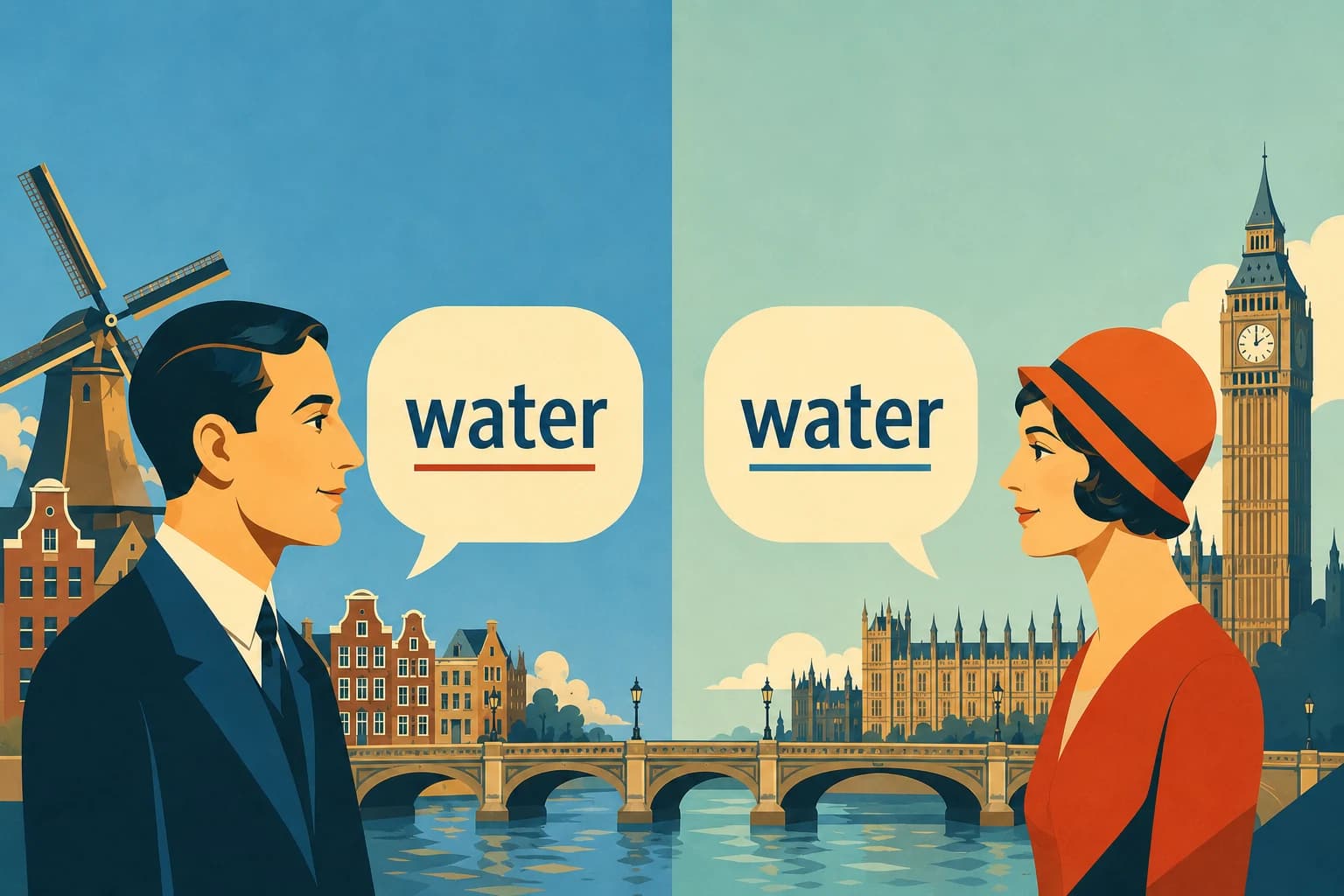
For a functional, conversational level rather than diplomat-grade fluency, you need far less. Dutch is a Germanic sibling of English: word order aside, an enormous amount of vocabulary is recognizable on sight. Water is water, appel is apple, goed is good.
The genuinely annoying parts
Honesty requires listing the friction, so here it is. The guttural G sound takes most learners a few weeks of feeling ridiculous. The de/het article split must mostly be memorized. And Dutch word order sends verbs to the end of subordinate clauses, which feels like the sentence is ambushing you.
None of this compares to genuinely hard grammar – no cases like Polish or Russian, no tones, familiar alphabet. At 30 minutes a day, a realistic path to comfortable B1 conversation runs about 12–18 months. That's the cost side. Now the return.
The Benefit Side: What Dutch Actually Buys You
Social life beyond the expat bubble
Dutch people are fluent in English, but they live in Dutch. Group conversations at parties, jokes, neighborhood chat, sports club banter – these run in Dutch, and a group won't switch languages all evening for one person. Internationals who never learn Dutch consistently report the same thing: plenty of acquaintances, few close Dutch friends.
Career headroom
You can get hired in English, especially in tech and multinationals. But large parts of the market – government, healthcare, education, law, most customer-facing roles, many SMEs – effectively require Dutch. Even in international companies, speaking Dutch widens promotion paths and makes you the person who understands what was actually said in the hallway.
Paperwork and permanence
If you settle long-term, the choice may not stay optional: the Dutch civic integration exam (inburgeringsexamen) requires proof of Dutch ability for many residents seeking permanent residency or citizenship, at A2–B1 level depending on which rules apply to you. Learning early, at your own pace, beats cramming under a deadline.
A bigger world than you'd guess
Dutch has around 24 million native speakers across the Netherlands, Belgium's Flanders region, and Suriname, and it's a springboard: after Dutch, German becomes dramatically easier to read. Small language, disproportionate leverage.
Weigh those against a few hundred hours, and the answer starts depending on who you are – so let's make it personal.
The Verdict by Learner Profile
For most English speakers, yes – Dutch is worth learning if you plan to live in the Netherlands or Flanders for more than a year. It takes roughly 550 class hours to reach professional level (far fewer for conversation), opens up local friendships, work culture and bureaucracy, and residency integration exams require it anyway.
| Your situation | Worth it? | Reasoning |
|---|---|---|
| Tourist or short business trips | No | English covers 100% of your needs; learn 20 polite phrases |
| Student on a 1-year exchange | Optional | English-taught programs abound; learn basics for fun |
| Expat staying 1–2 years | Leaning yes | A2 level transforms daily life; low time investment |
| Settling long-term / Dutch partner | Emphatically yes | Friendships, career, integration exam, family conversations |
| Working in healthcare, education, government | Required | These sectors run in Dutch, full stop |
| Language hobbyist | Great pick | Easiest-tier language, quirky charm, gateway to German |
If you sit in a "yes" row, one obstacle remains – the one every learner in the Netherlands complains about.
The Switch-to-English Problem (and How to Beat It)
You order in careful Dutch. The barista hears your accent and replies in flawless English. Repeat this fifty times and most learners give up – which is exactly why many learners stall around A2.
Understand the motive first: Dutch people switch to be efficient and polite, not to insult your grammar. Then counter it deliberately.
- Keep answering in Dutch. The bilingual ping-pong feels absurd for two exchanges; most people switch back once they see you're committed.
- Use the magic sentence. "Ik wil graag Nederlands oefenen" – I'd like to practice my Dutch. It works disturbingly well; you're now a charming project, not an obstacle.
- Build a pressure-free practice base. Get your speaking reps somewhere judgment-free – a tutor, a language buddy, or Talkey's Listen & Repeat exercises, where no barista is waiting – so real-world Dutch is performance, not practice.
- Recruit allies. One Dutch friend, colleague, or partner who agrees to never switch is worth more than any textbook.
The switch problem is real but beatable, and it fades precisely as your Dutch improves – the ultimate positive feedback loop. All that's left is the verdict.
FAQ
Can I live in the Netherlands without speaking Dutch?
Yes, comfortably – in the short term and in the big cities. Around 90–95% of Dutch people speak English, official services often accommodate it, and international workplaces are common. The costs appear gradually: shallower friendships, a capped job market, harder bureaucracy outside the Randstad, and integration exam requirements if you pursue permanent residency or citizenship.
How long does it take an English speaker to learn Dutch?
Dutch sits in the easiest FSI category for English speakers, with roughly 550 class hours estimated for full professional proficiency. For everyday conversational ability (B1), most consistent learners need substantially less – on the order of 300–400 hours. At 30 minutes daily, expect basic conversations within months and comfortable B1 in about a year to eighteen months.
Is Dutch harder than German?
For English speakers, Dutch is generally considered easier. Dutch dropped most of the case system that makes German grammar famous, and FSI rates Dutch in Category I while German gets its own slightly harder category. The two share huge amounts of vocabulary, so Dutch also works as a friendly stepping stone if German is your eventual goal.
Is Dutch useful outside the Netherlands?
More than most people assume. Dutch is an official language in Belgium (Flanders, including Antwerp and Ghent), Suriname, and several Caribbean islands, totaling around 24 million native speakers. Flanders in particular appreciates Dutch-speaking foreigners, since locals there may switch to English slightly less readily. It also gives you a significant head start on German and, to a lesser degree, the Scandinavian languages.
Why do Dutch people switch to English when I try Dutch?
It's efficiency and politeness, not criticism. Most Dutch people speak excellent English and switch automatically to save you effort, the way you'd hold a door open. Telling them directly that you want to practice – "Ik wil graag Nederlands oefenen" – flips the dynamic, and most will happily slow down and stick to Dutch with you.
Do I need Dutch for the integration exam?
If you're required to complete civic integration (inburgering), yes – the exam tests Dutch reading, writing, listening, and speaking, at A2 or B1 level depending on which legal regime applies to your case. EU citizens are generally exempt from the obligation, but non-EU residents pursuing permanent residency or Dutch citizenship usually must pass it. Check current DUO and IND rules for your situation.
Key Takeaways
Run the numbers and the forum wisdom falls apart for anyone staying past a year. Three things to remember: Dutch is one of the cheapest languages an English speaker can learn, at roughly 550 hours for professional levels and far less for conversation. The English-everywhere argument is true for logistics but false for friendship, career ceilings, and feeling at home. And the switch-to-English problem is a solvable etiquette puzzle, not a verdict on your ability.
So, is Dutch worth learning? If the Netherlands or Flanders is part of your future, yes – quietly, compoundingly yes. Talkey's bite-size Dutch lessons are a low-pressure place to build the confidence the baristas can't shake. Veel succes!